How to Create Content Using Technology for Creative Work?
As the demand for informative and engaging content rises, creators are required to work faster and more efficiently.
Article
Advancements in digital technology have transformed how content creators work, produce art, and reach audiences. The creative process, which once required high-level technical skills and complex equipment, can now be executed more easily through various digital innovations. Technology is no longer merely a support tool; it has become a primary element in strengthening productivity and the quality of modern work.
As the demand for informative and engaging content rises, creators are required to work faster and more efficiently. This is where the role of technology becomes crucial: facilitating the content creation process from the planning stage to distribution on global platforms.
Here are four ways technology assists creators in the modern era:
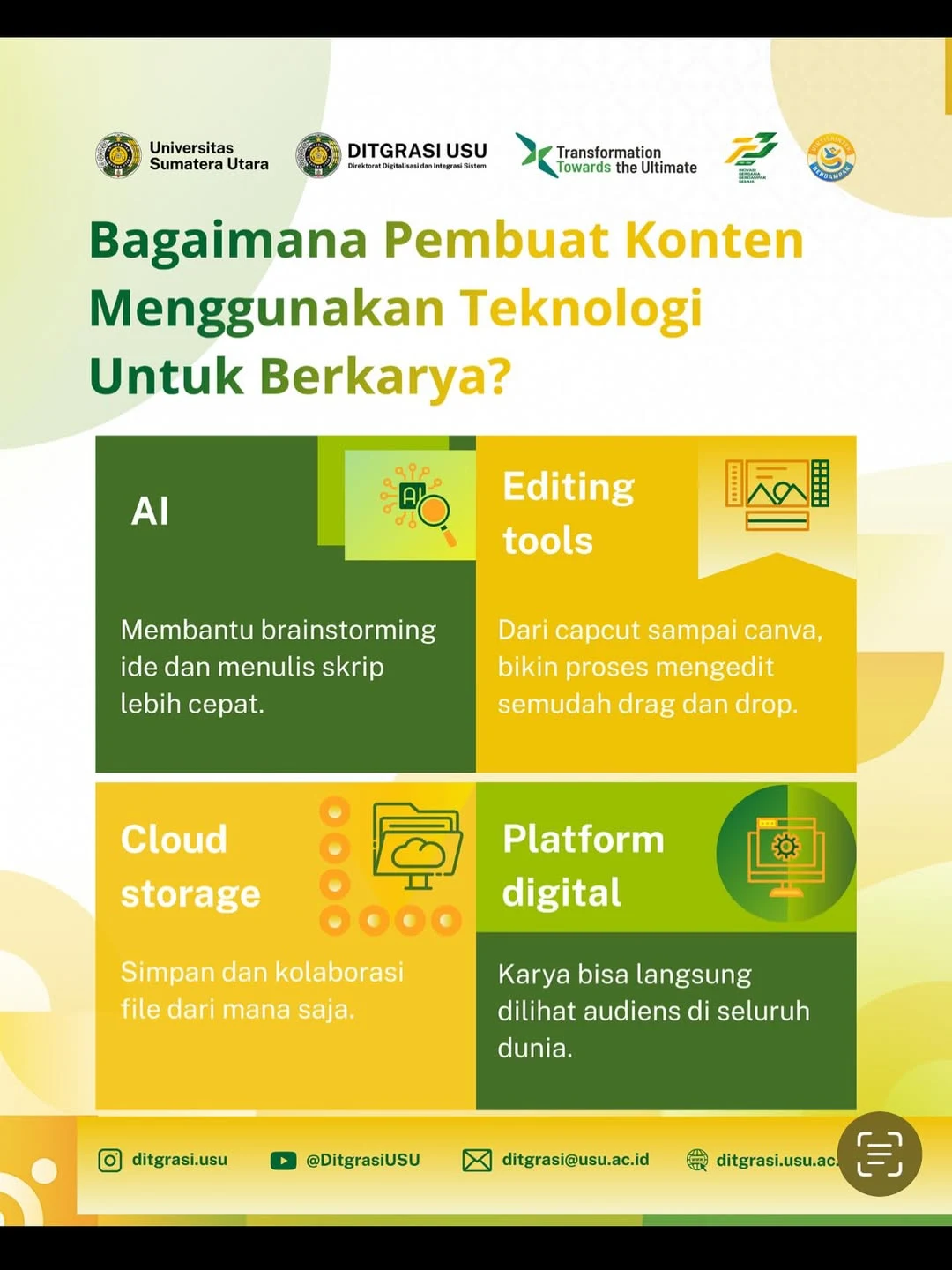
1. Utilizing AI to Support Ideation and Writing Artificial Intelligence (AI) has now become a partner for creators in developing ideas, structuring concepts, and even writing scripts. With the ability to generate references and creative ideas in seconds, AI helps creators save time while sharpening the content planning process.
2. More Accessible Editing Tools Applications such as CapCut, Canva, and various other editing platforms provide intuitive interfaces. Users simply need to "drag and drop" to produce interesting designs or videos. This practicality allows the editing process to be performed by anyone without requiring complex technical skills.
3. Cloud Storage for Security and Mobility Cloud-based storage services offer convenience in storing, organizing, and sharing files. Creators can access their work from anywhere, make direct revisions, and collaborate with teams in real-time. This mobility is the key to creating an efficient and flexible workflow.
4. Digital Platforms as Global Publication Spaces Digital platforms like YouTube, Instagram, TikTok, and personal blogs provide ample space for creators to publish their work. Content can instantly reach global audiences, expand networks, and open up opportunities for cross-border collaboration. The presence of these platforms ensures that every creator has the potential to make an impact far greater than in previous eras.
It is important to underscore that while AI offers extraordinary efficiency, its usage must be carried out with full responsibility and ethics. Creators need to be wary of the potential for excessive use of AI, particularly regarding the risk of copyright infringement of original works used as training data. Ensure that the generated output retains a sense of originality, complies with intellectual property laws, and places human creativity as the primary driver, rather than serving merely as an automation tool.